How many security cameras do I need? For most single-family homes in South Florida, six to eight. A condo or townhome usually needs three or four. An estate or a property with outbuildings runs twelve to sixteen. But the count is an output, not an input. It falls out of one question: how many ways can a person walk onto your property, and on which of those approaches do you need to see a face rather than a shape? Answer that and the number answers itself.
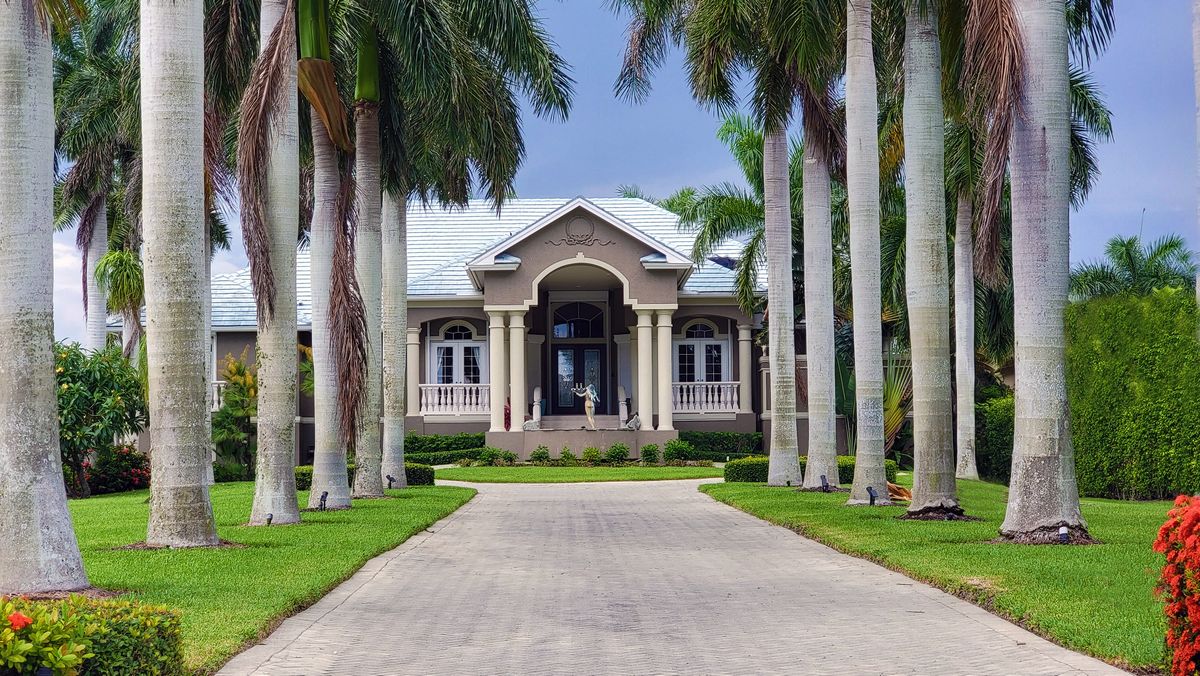
How many security cameras do I need, by property type
| Property | Typical camera count | Typical installed price |
|---|---|---|
| Condo or townhome | 3 to 4 | $1,900 to $2,900 |
| Single-family home, standard lot | 6 to 8 | $3,500 to $4,800 |
| Larger home, pool deck, corner lot | 8 to 10 | $5,200 to $7,500 |
| Estate or multiple buildings | 12 to 16 | $8,000 to $16,000 |
| Small business, retail or HOA | 16 to 32 | $18,000 to $45,000+ |
Those are hard-wired 4K cameras recording continuously to a local NVR, installed, with no monthly fee attached. The full breakdown of what moves those numbers is in our security camera installation cost guide. Use the table as a sanity check on a proposal, not as a specification. The rest of this guide is how you get to your own number.
Ignore the one camera per 500 square feet rule
This rule turns up in most articles on the subject and it is the wrong unit of measurement. Interior floor area has almost nothing to do with how exposed a property is. A 4,000 square foot two-story on a zero lot line in a gated community has fewer ways in than a 2,200 square foot single-story on a corner acre in Parkland with a back gate onto a canal path. The square footage rule gives the big house eight cameras and the small one four. Reality is the other way around.
What actually sets the count is the perimeter, the number of doors and gates, the sight lines, and how far the camera has to see. Two of those are about the land, not the house.
Count approaches, not rooms
Walk your property line and count every way a person could get from the street to a door without climbing anything. This is the inventory that sets your camera count:
- Every pedestrian way in. Front walk, each side gate, the back slider, the service door from the garage to the yard. One camera each, aimed across the path rather than down it.
- Every vehicle way in. The driveway apron at the street, and the garage interior. The garage is the single most common entry point in a residential burglary and the one homeowners skip most often.
- The pool deck and lanai. In Florida this is a room that happens to be outside, with a screen door that a determined person opens in four seconds. It is a rear approach whether or not it feels like one.
- The blind side. Every house has one elevation nobody can see from the street or from a neighbor. That side is where someone works unhurried. It gets a camera even though nothing is there.
- One interior choke point. The hallway or stair landing everyone has to pass through. One camera, not six.
Add them up. For a typical Boca Raton or Coral Springs single-family home that lands at six to eight, which is why that range keeps appearing. The difference between a six-camera house and a ten-camera house is almost never square footage. It is a second gate, a longer driveway, or a lot you can walk onto from three sides.
The three jobs a camera can do, and why it changes the count
Not every approach needs the same camera, and some need two. The industry standard here is the DORI scale in EN 62676-4, which rates a camera by how much of your subject lands on the sensor at a given distance. Stripped of the jargon, a camera is doing one of three useful jobs:
| Job | What the footage proves | What it takes |
|---|---|---|
| Detect | Someone is there. Good enough to trigger an alert. | A wide lens covering a large area. Roughly 25 pixels per metre of scene. |
| Recognize | That is my neighbor. That is a white pickup. | Moderate zoom at mid distance. Around 125 pixels per metre. |
| Identify | That specific face. That specific plate. The footage a detective can use. | A tight field of view on a known choke point. Around 250 pixels per metre. |
The practical consequence: one camera cannot detect across a wide area and identify at the far end of it at the same time. A single wide camera at the garage watching a 150 foot driveway will tell you a car arrived. It will not tell you which car. That is why a long driveway gets two cameras, one wide for context and one varifocal aimed tight at the apron, while a short driveway gets one. Approaches set your count. This decides which approaches need a second camera.
It is also the honest answer to why a twelve-camera proposal can be worse than an eight-camera one. Twelve cameras all doing the detect job produce twelve angles on a person you cannot identify.
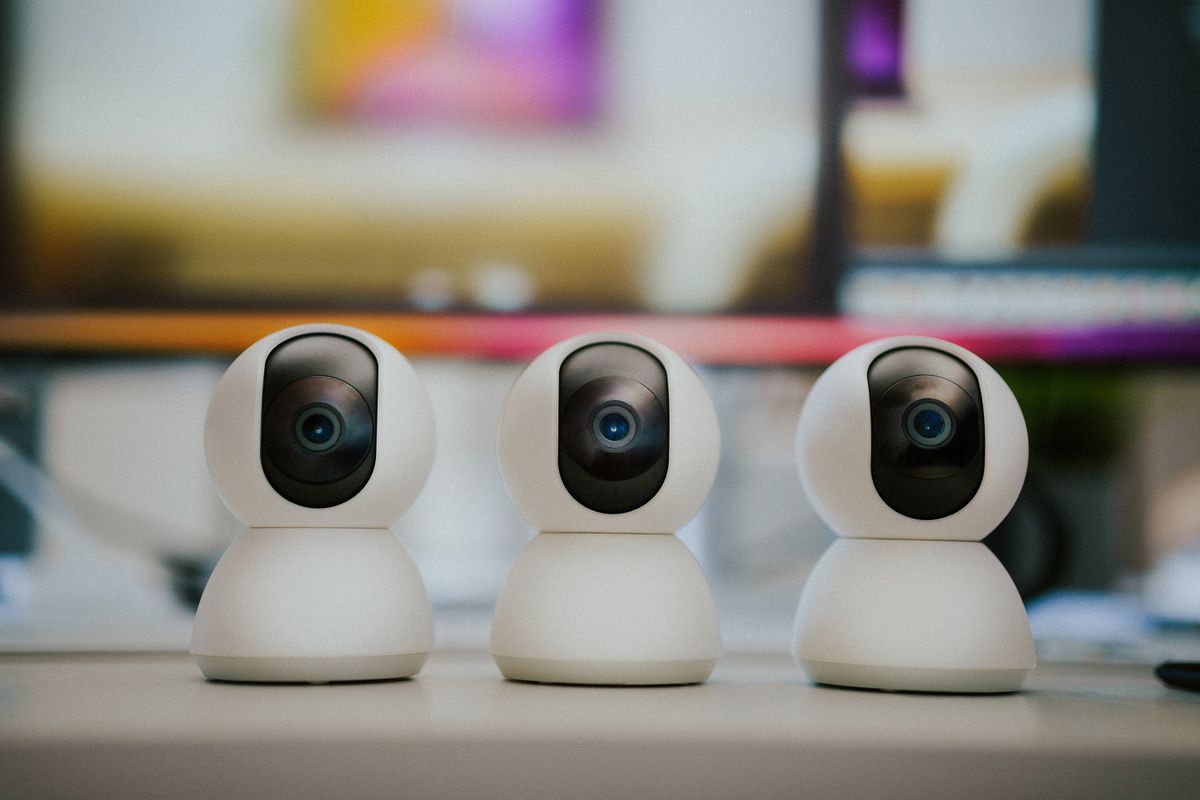
How many indoor security cameras do you need?
Fewer than the internet tells you. Guides that recommend four cameras in the living room and one in each child's bedroom are counting product, not coverage. Indoors, one camera on the main interior choke point plus one where the valuables actually live covers close to every residential case. Zero indoor cameras is a defensible answer if the exterior coverage is good, on the straightforward logic that someone who never gets in never gets filmed inside.
Two lines worth holding: no cameras in bedrooms or bathrooms, and if you have live-in help or regular staff, tell them where the cameras are. Florida is also an all-party consent state for audio, which is a separate decision from video and one worth making deliberately rather than leaving switched on by default.
What Florida adds to the number
- Concrete block changes where cameras go, not how many. CBS construction limits your cable routes, so the plan bends around soffits and existing penetrations. Occasionally that works in your favor: one camera at an outside corner can cover two elevations that would each need their own on a wood-framed house.
- A gated community is not coverage. The guard gate logs a visitor and watches the entrance. It does not watch your side yard, and pulling footage from an HOA system takes days and a board member in a good mood. Gate cameras reduce nothing about your own count.
- Snowbird vacancy. A house sitting empty from May to October needs the interior camera a year-round house can skip, plus a camera on the water shutoff and the panel closet. An empty house has no witnesses.
- Waterfront property. The dock and seawall are an approach, and a boat is a vehicle. Coastal properties usually run two to three cameras above the count an identical inland house would need.
- Storm season. After a storm you want footage of the roof line and the pool cage for the insurance adjuster, which is a different aim than a security shot. Two cameras with that framing in mind cost nothing extra at install time and pay for themselves once.
- Salt air and lightning change the spec, not the count. Stainless hardware, gel-sealed terminations and surge protection on every run leaving the building. That is a durability line item, and skipping it is how a system that was correctly sized fails in its third summer anyway.
How many cameras can your recorder and network actually carry?
The second half of the count, and the half nobody writing these articles mentions. Cameras plug into a recorder with a fixed number of channels and a switch with a fixed power budget. Get the count right and the hardware wrong and you are buying a recorder twice.
| Cameras | Recorder | 30 days of 4K | Switch |
|---|---|---|---|
| 4 | 8 channel | 2TB gets about three weeks, 4TB gets the month | 8 port PoE |
| 6 | 8 channel | 4TB | 8 port PoE |
| 8 to 10 | 16 channel | 6TB | 16 port PoE |
| 12 to 16 | 16 or 32 channel | 8TB and up | 24 port PoE |
The arithmetic behind that column: a 4K camera recording continuously with smart H.265 encoding writes roughly 20 to 25GB a day, so six cameras for thirty days is about 4TB. Storage is the cheapest upgrade on the whole list and the one people most often wish they had doubled, usually about nine days after an incident they wanted to look back on.
On power, budget 8 to 12 watts per 4K camera with the infrared illuminators running, because that is the state they are in during the hours you actually care about. A switch with a 60 watt total budget does not run eight cameras at night no matter how many ports it has. And every camera you add is another device on the house network, which is why camera counts and network capacity get designed together rather than in sequence.
How many security cameras does a business need?
Commercial counts are driven by liability rather than approaches, so the method changes. You are covering every point of sale, every exterior door including the one by the dumpster, the stockroom, the safe, and the parking lot where the slip and fall claims come from. A small retail space or restaurant typically lands between eight and sixteen cameras, and the parking lot alone often needs three. HOAs and gated communities add entrance plate capture, which is its own specification. We cover that on the commercial camera systems page.
The honest answer
Two cameras placed well beat six placed badly, every time. If someone hands you a proposal that leads with a camera count and a price, and there is no coverage map showing what each camera sees and which job it is doing, you have been handed a product list rather than a design. Ask for the map. Any installer worth hiring already made one, and the good ones will happily talk you down from a number you do not need.
If you are weighing how much of this to take on yourself, we wrote that out honestly in DIY vs. professional camera installation, including the cases where hiring anyone is a waste of your money. And if you want the number for your specific property, that is what the walk is for. See what a professional camera installation includes.
Get the count right for your property
We walk the property, map every approach, and show you exactly what each camera would see before you spend anything. Free on-site assessments across Boca Raton and South Florida. Call (561) 299-0133.
Get a Free Quote